
What Britain's Triple Lock Reform Means for Pensioners
The proposed reform could save the UK billions, but how the new national care service is implemented will determine its success.


On September 29, 2026, British Prime Minister Andy Burnham announced a plan to reform the country's triple lock in an effort to reallocate funds towards a new National Care Service.
What Changes
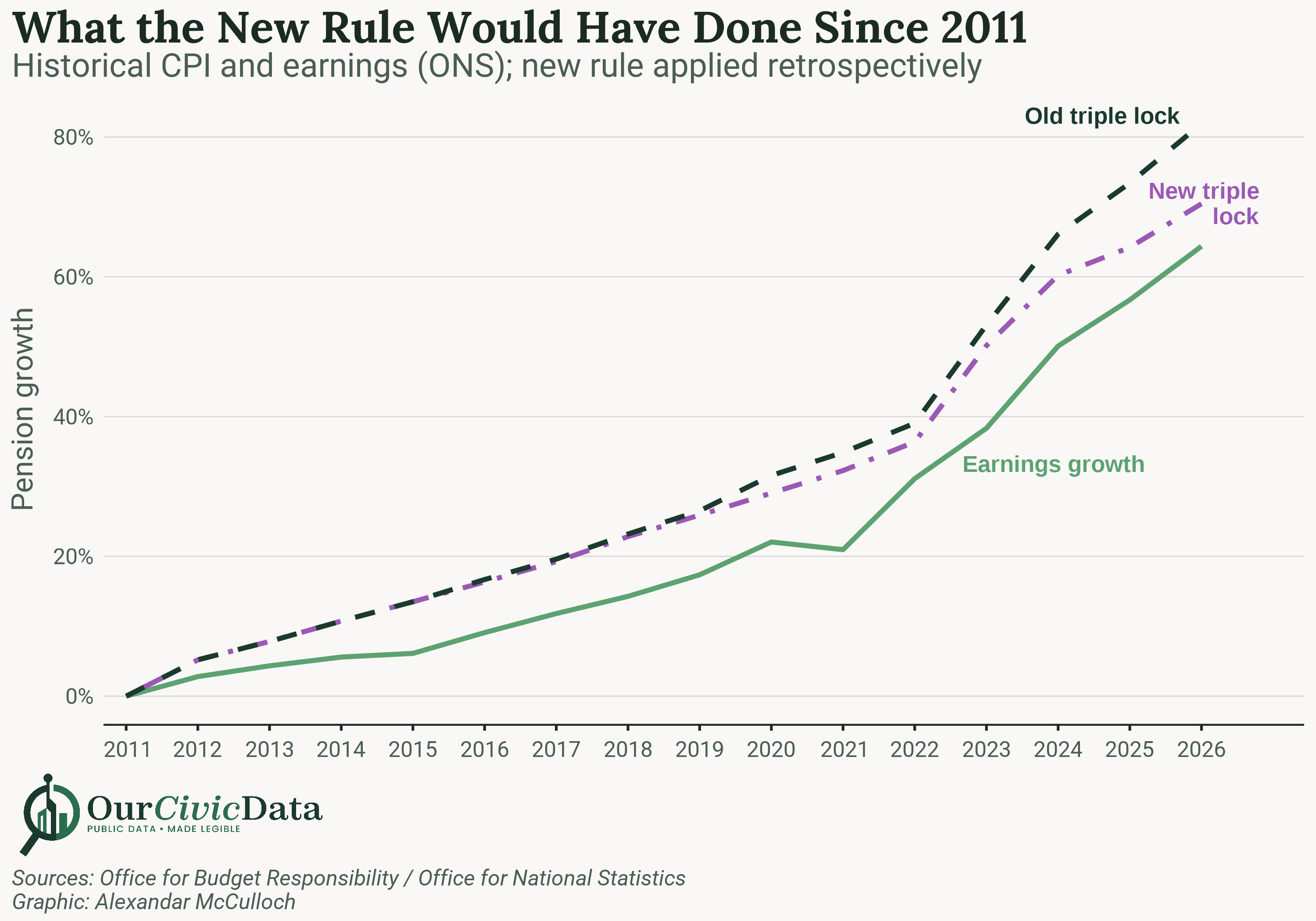
Today the state pension rises each April by the highest of three numbers: September CPI inflation, average earnings growth over May to July, or 2.5%.
Under the proposal, as the Institute for Fiscal Studies describes it, the pension would rise by the highest of CPI, 2.5%, or whatever is needed to keep it in line with average earnings growth since the new rule began.
Under the current rule, a year of strong earnings growth permanently lifts the pension relative to earnings, and a later slowdown never gives it back. The new rule still stops the pension from falling behind earnings, but it stops volatility from pushing it ahead.
Understand what your government is doing.
Free, rigorous analysis of public data in your inbox. No jargon, no spin.
Further reading

Landslide on Loan: Voters Poised to Take Back Their Votes from Labour
Historic numbers masked a fragile coalition of protest voters. One year later, Labour struggles to navigate a post-Brexit Britain and a suspicious public.
Discussion
Become a member to join the conversation.
Become a member